Ball Valve Datasheets
| |||
|---|---|---|---|
| Ball Type | Datasheets | Ball Type | Datasheets |
 |
|
|
|
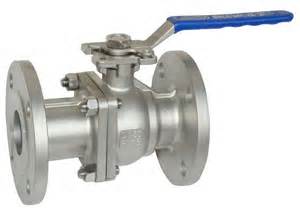
A ball valve, abbreviated as BV, is a quarter turn valve used for changing the direction of a process stream (divert or shut off). Ball valves can be automated to automatically shutdown or open depending on the orientation of the actuator. True ball valves should not be used as control valves as velocities between the ball and seat can be high enough to wash out the sealing portion of the valve. The ball on the valve can be characterized to act as a control valve such as a V-ball type design.
Ball Valve Design Classification
- Full Port Ball Valve - Full bore valve has the same bore diameter in the ball as the internal diameter of the pipe.
- Metal Seated Ball Valve - Metal seated ball valves are described as extreme service valves. They are called metal seated ball valves because the ball and the seat are made out of metal. These are typically seen in high pressure & high temperature applications such as steam in a power generation plant. Metal seated valves are high torque valves due to the high pressure differential across the valve and the metal ball and seat. In order to completely seal, the seat must be machined to exactly match the ball. If there is any misalignment of the ball, the valve will leak. This is because the metal seat is less forgiving and less pliable than soft seated valves.
- Multi-port Ball Valve - A multi-port valve is a type of valve which has normally more than two ports and it can have either 3-way, 4-way or 5-way control depending on the application. It is typically used for the selection of several flow paths to enable the process to continue in the manner designed.
- Non-Trunion (Floating) Ball Valve - Floating ball valves are used in low pressure or small bore processes. A floating ball valve has two seats, located upstream and downstream of the ball. When the valve is closed, pressure differential across the valve assists in seating the ball. The adjacent ball valve is a ANSI 300 8" soft seated floating ball valve with manual actuator (handwheel).
- Reduced Port Ball Valve - Reduced (standard or regular) bore valve has a smaller bore diameter in the ball than the internal diameter of the pipe.
- Standard Port Ball Valve - A standard port ball valve is about the same diameter as the pipe or tube coming into and exiting it. The working part of the valve is the rotatable ball inside the valve body. Since the working part of the valve fits inside the valve body, the bore through the valve ball is smaller than the diameter of the valve’s connecting pipe or tube.
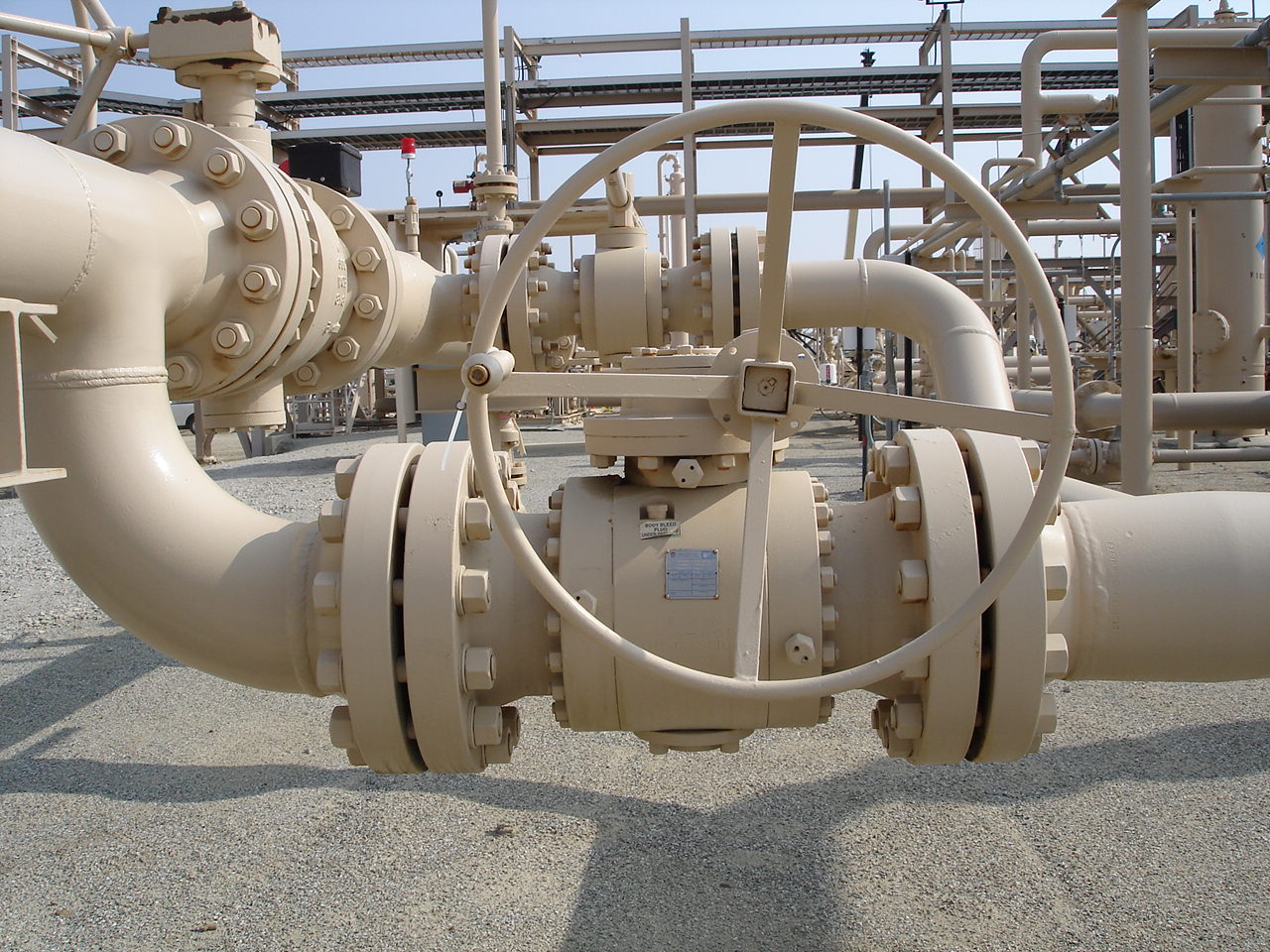 Trunnion Ball Valve - Trunnion design is simply the use of upper and lower supports to retain the ball under pressure. Named for the "trunnion" historically used to support a cannon, a ball valve trunnion essentially doubles the safety and usability of a ball valve. Another important benefit of the trunnion design is that it allows the ball valve to act as a true union. The downstream piping can be disconnected under full upstream pressure (user is responsible to ensure that downstream piping is drained of liquid and that valve is indeed closed and secured to upstream piping). The trunnion on a two-way ball valve supports the ball in much the same way as the stem does at the top. The trunnion on a three-way ball valve is a much different design, being more like a supporting ring, but provides the exact same function and inherent stability.
Ball Valve Advantages and Disadvantages | |
|---|---|
| Advantages | Disadvantages |
|
|
- V-port Ball Valve - A v-port ball valve has either a "v" shaped ball or a "v" shaped seat, which allows the orifice to be opened and closed in a more controlled manner with a closer to linear flow characteristic. This type of valve is also known as a control valve, whereby the flow velocities need to be controlled as required per the application. When the valve is in the closed position and opening is commenced the small end of the "v" is opened first, allowing stable flow control during this stage. This type of design requires a generally more robust construction due to higher velocities of the fluids, which might damage a standard valve. Despite being a control valve, they are not considered to be as accurate as a balancing valve, needle valve, globe valve, or pressure regulating valve.