
Chemistry
Chemistry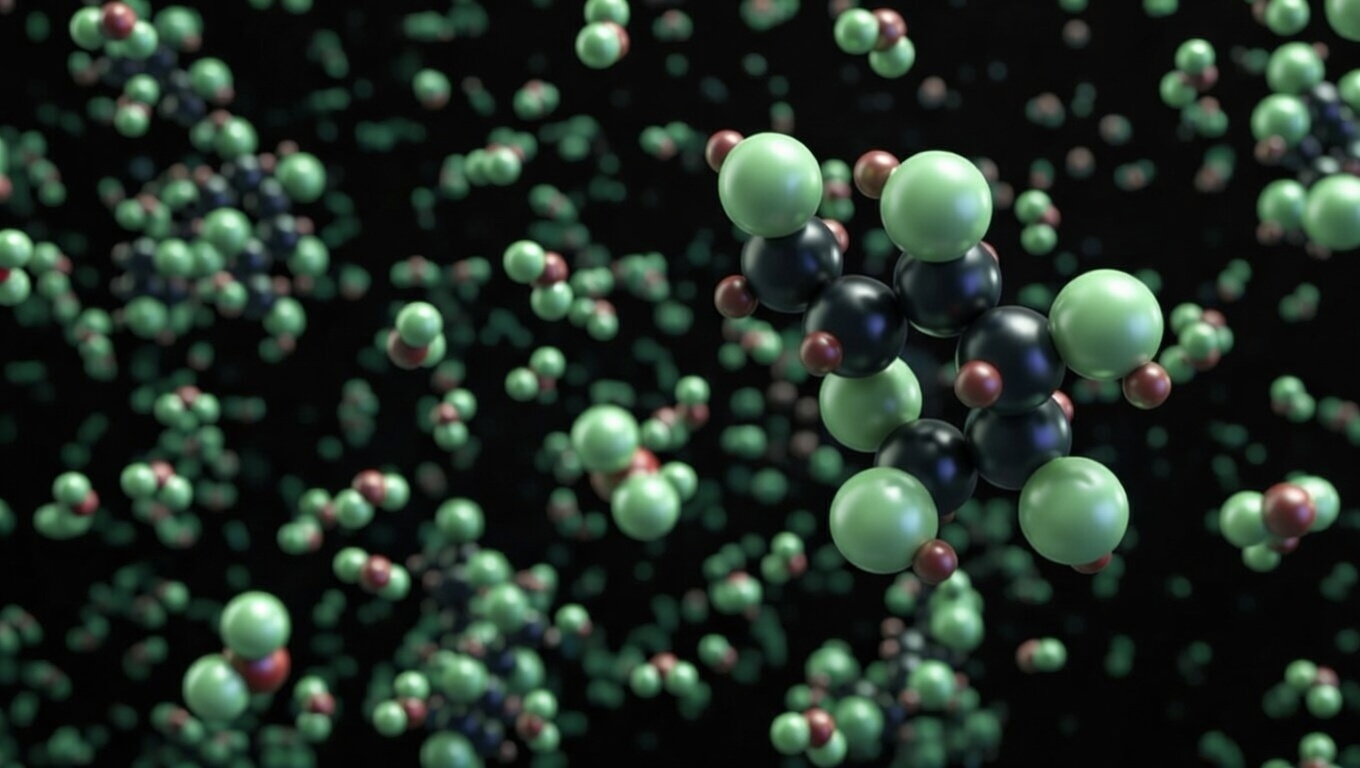 Chemistry is the scientific discipline that studies the composition, structure, properties, and transformations of matter. Matter consists of substances made from atoms and molecules, and chemistry focuses on understanding how these particles are arranged and how they interact. The field examines the identities of substances, the quantitative relationships between their components, and the physical and chemical properties that arise from their atomic and molecular structures. These properties include measurable characteristics such as mass, density, reactivity, phase behavior, and energy changes during interactions. The field is grounded in experimentally verified principles from thermodynamics, quantum mechanics, and kinetics, which explain why substances behave in specific ways.
A central focus of chemistry is the study of chemical reactions, which are processes in which substances (reactants) are transformed into different substances (products) through the breaking and formation of chemical bonds. These transformations follow established physical laws, including the conservation of mass and the conservation of energy. Chemistry therefore seeks to explain how and why substances combine, separate, or change form under different conditions such as temperature, pressure, concentration, and the presence of catalysts.
| Science |
| Natural Science |
| Chemistry |
|
Chemistry operates across multiple scales of matter. At the atomic and molecular level, it examines electrons, chemical bonding, molecular geometry, and intermolecular forces. At larger scales, it studies bulk properties and the behavior of materials, solutions, and mixtures. The discipline uses quantitative measurement and theoretical models to describe and predict the behavior of substances. Fundamental principles such as atomic theory, thermodynamics, quantum mechanics, chemical kinetics, and equilibrium provide the framework for understanding chemical systems.
Chemical Branches