Mining
Civil, Mining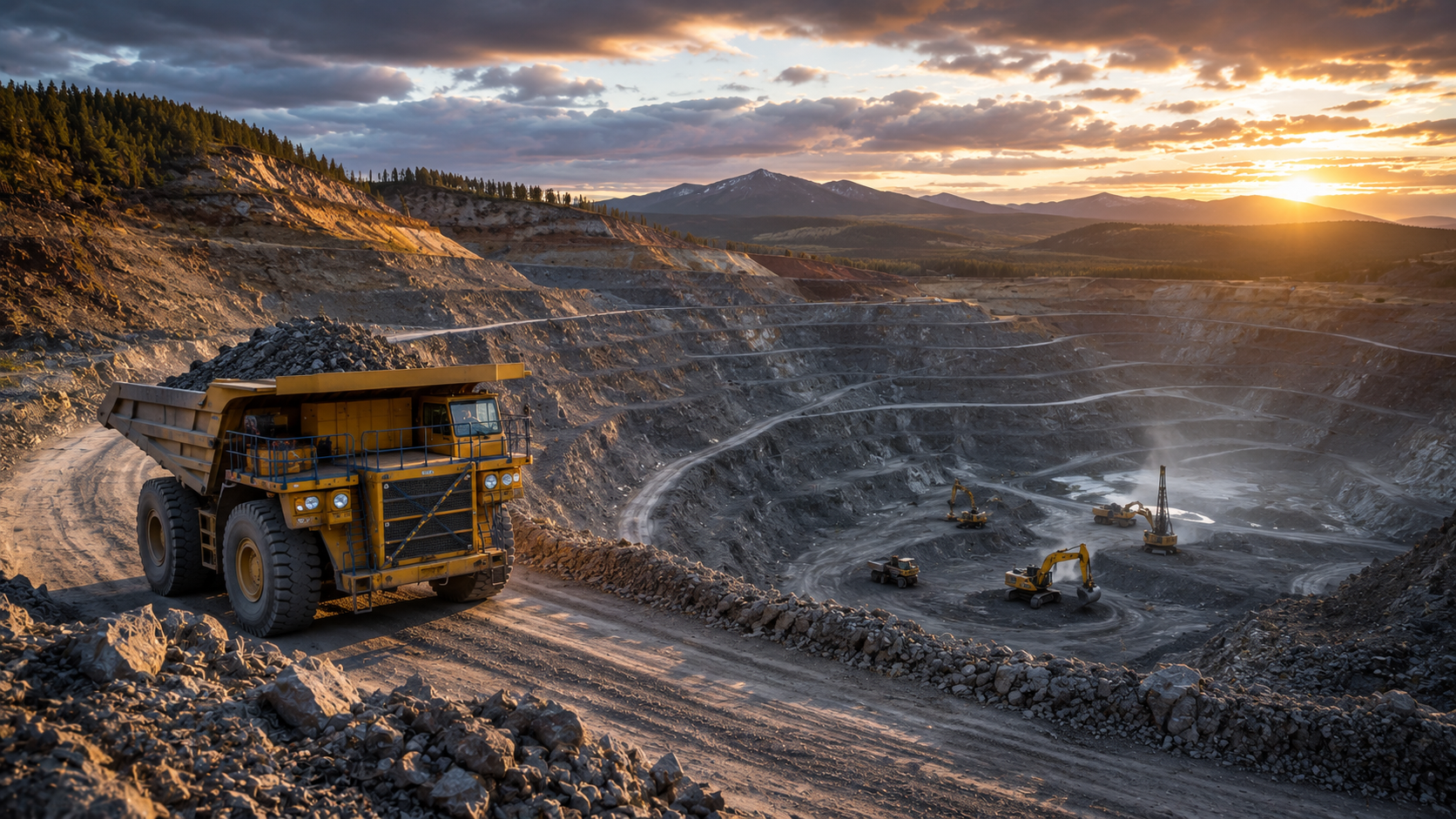 Mining engineers design, plans, and oversees the processes involved in extracting minerals from the earth. They work in various stages of mining operations, from initial exploration and feasibility studies to the development and operation of mines, and eventually to the closure and rehabilitation of mining sites. Mining engineers often work closely with geologists, environmental scientists, and other engineers to ensure that mining activities are carried out safely, efficiently, and with minimal environmental impact. They may work in various environments, including underground mines, open-pit mines, or office settings, depending on the stage of the mining project.
Mining Branches
Mining can be classified into several branches based on the location of the mineral deposits and the techniques used for extraction. Each mining method has its advantages and disadvantages, typically determined by factors such as the type of mineral, depth of the deposit, economic feasibility, and environmental impact.
Environmental Mining and Mine Reclamation - Focuses on environmental protection, waste management, land restoration, water treatment, pollution control, and rehabilitation of mined land after mining operations cease.Exploration Mining and Economic Geology - Focuses on locating, evaluating, and characterizing mineral deposits through geological mapping, drilling, geophysics, geochemistry, and resource estimation.
Geotechnical and Rock Mechanics Mining - Studies the mechanical behavior of rock masses surrounding mines. It supports mine stability, tunnel design, slope stability, ground support systems, and hazard prevention.
Marine or Offshore Mining — Marine mining is the branch of mining conducted in oceans, seas, or large bodies of water. It includes the extraction of offshore sand and gravel, marine diamonds, and exploration of deep-sea mineral deposits such as polymetallic nodules, cobalt-rich crusts, and seafloor massive sulfides.
Mine Safety and Health - Deals with occupational safety, ventilation, fire prevention, dust control, explosion prevention, emergency response, and worker health within mining environments.
Mine Surveying - Responsible for measuring, mapping, and determining the spatial position of underground and surface mine workings using surveying instruments and geospatial methods.
Mine Transportation and Haulage - The movement of ore, waste rock, workers, and equipment through haul trucks, conveyors, rail systems, hoists, pipelines, and automated transport systems.
Mine Ventilation Engineering - Specialized branch concerned with airflow management in underground mines to control heat, gases, dust, and oxygen supply for safe operations.
Mineral Processing and Extractive Metallurgy - The processing of mined ore to separate and concentrate valuable minerals. It includes crushing, grinding, flotation, magnetic separation, leaching, smelting, and refining processes.
Placer Mining - Recovers valuable minerals from alluvial deposits such as riverbeds, stream sediments, beaches, and floodplains. Common techniques include panning, sluicing, dredging, and hydraulic mining. It is historically associated with gold, tin, platinum, and gemstones.
Solution Mining (In-Situ Mining) - Mining in which minerals are dissolved underground and pumped to the surface in liquid form. It is commonly used for salt, potash, sulfur, uranium, and some copper deposits. In-situ recovery methods are widely applied where conventional excavation is impractical.
Surface Mining - Extracts mineral deposits located near the Earth’s surface. It includes methods such as open-pit mining, strip mining, quarrying, mountaintop removal mining, and placer mining. Surface mining is commonly used for coal, iron ore, copper, limestone, sand, gravel, and many industrial minerals.
Underground Mining - Extracts minerals and ores located deep below the surface through shafts, tunnels, drifts, and declines. Major underground methods include room-and-pillar mining, longwall mining, cut-and-fill mining, block caving, shrinkage stoping, and sublevel stoping. This branch is widely used for coal, gold, zinc, lead, nickel, and other deep ore bodies.