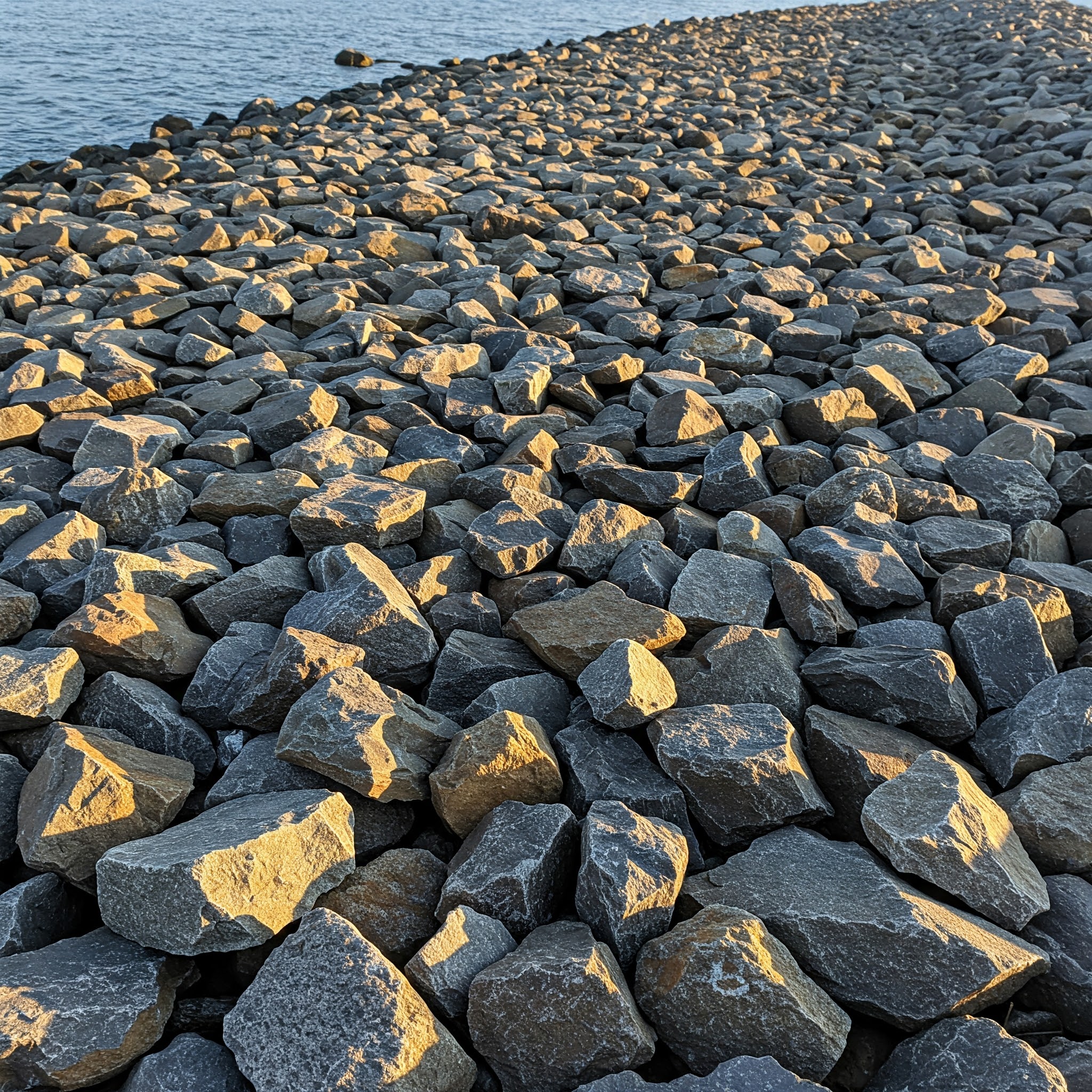
 Riprap is a layer of large, durable stones or broken rock placed on soil surfaces to protect them from erosion caused by flowing water, wave action, or surface runoff. In civil engineering, it is most commonly used along riverbanks, shorelines, bridge abutments, culvert outlets, and embankments where hydraulic forces have the potential to dislodge soil particles and initiate progressive erosion. The fundamental purpose of riprap is to provide a stable, erosion-resistant armor layer that absorbs and dissipates the energy of moving water, thereby preventing the underlying soil from being scoured or washed away.
The effectiveness of riprap depends on several well-established design considerations, including stone size, gradation, layer thickness, and proper placement. The individual rock pieces must be large and heavy enough to resist movement under expected flow velocities and shear stresses, which are typically determined using hydraulic engineering principles. A well-graded mixture of stone sizes is often specified to minimize voids and improve interlocking, increasing overall stability. Beneath the riprap, a filter layer, either granular material or geotextile is commonly installed to prevent fine soil particles from being washed out through the voids in the rock layer while still allowing water to drain. When properly designed and constructed, riprap provides a long-term, passive erosion control solution that requires minimal maintenance and performs reliably under a wide range of hydraulic conditions.
Riprap Planning Considerations
When planning a riprap installation, several important considerations must be addressed to ensure its effectiveness and sustainability. Installation involves a thorough understanding of the site’s physical characteristics, environmental considerations, design requirements, and long-term maintenance needs. Balancing these factors will ensure that the riprap provides effective and sustainable erosion protection.
Site Assessment
Slope Stability - The slope’s angle and stability must be evaluated to determine the suitability of riprap. Too steep a slope may cause rocks to shift, while a gentle slope enhances stability.
Soil Conditions - Understanding the type and condition of the underlying soil is critical. Soft or loose soils may require geotextile fabric or other reinforcement beneath the riprap to prevent erosion and slippage.
Water Flow Characteristics - Analyze the water velocity, direction, and frequency. High-velocity currents may require larger and more densely packed stones, while gentler flows can use smaller rocks.
Climate and Weather Patterns - Consider the impact of seasonal changes, such as freeze-thaw cycles, rainfall, or flooding events, which can affect the stability of the riprap over time.
Material Selection
Rock Type and Size - The type and size of stones should be chosen based on the site’s needs. Angular rocks that interlock are generally preferred for stability. Stone size depends on the anticipated energy of water flows and erosion rates.
Durability - Use hard, weather-resistant materials such as granite or other dense rocks that can withstand long-term exposure to water, ice, and wind without breaking down.
Availability - Consider the cost and availability of riprap materials. Transporting large stones over long distances can add significant expense, so sourcing from nearby quarries is preferable.
Design Considerations
Thickness of Riprap Layer - The thickness of the riprap layer should be sufficient to resist displacement. Typically, the layer should be 1.5 to 2 times the diameter of the largest stone being used.
Toe Protection - Protecting the base or toe of the slope is crucial. Toe scour (undermining at the base) can destabilize the riprap. You may need to include a foundation layer of larger stones or additional protective measures.
Filter Layer or Geotextile Fabric - A geotextile filter layer between the riprap and underlying soil is often used to prevent soil erosion through the gaps in the riprap, while allowing water to drain.
Grading and Vegetation - In some cases, riprap can be combined with vegetation to improve aesthetic value and contribute to erosion control. Graded riprap (using varying stone sizes) can help with this.
Environmental and Regulatory Considerations
Permits and Regulations - Most riprap projects near bodies of water require permits from local, state, or federal agencies, such as environmental protection authorities or water management districts.
Environmental Impact - Consider the environmental impact on local ecosystems. The installation of riprap may disrupt aquatic habitats, vegetation, and wildlife, which may require mitigation efforts like incorporating wildlife-friendly designs.
Runoff and Sediment Control - During installation, control measures (silt fences, sediment basins) should be in place to prevent excess runoff or sediment from entering waterways.
Cost and Maintenance
Initial Costs - Budget for material, transportation, labor, and any engineering analysis required. Riprap installation can be capital intensive, especially when larger stones are needed or site conditions are challenging.
Long-term Maintenance - While riprap generally requires low maintenance, periodic inspections are necessary to check for stone displacement, erosion under the riprap, and any required repairs.
Scouring and Settling - Be aware that even well-designed riprap installations can suffer from scouring over time, particularly at the edges or toe of the structure, requiring reinforcement or additional protection.
Safety Considerations
Public Access and Safety - If the riprap is in an area frequented by the public, such as near beaches or riverbanks, consider safety measures. Large, uneven rocks can pose a tripping hazard or make access to the water difficult.
Storm Surge and Flooding - In areas prone to heavy storms, flooding, or storm surge, ensure the riprap is designed to withstand these forces. Over-design in such conditions can prevent failure during extreme events.
Aesthetic Considerations
Visual Impact - Riprap may not always blend in with the natural environment, and in some cases, aesthetic considerations (especially in public or recreational areas) should be factored into the design. Blending the riprap with native plants or using rounded river stones can improve its appearance.
Combination with Other Techniques - Riprap can be combined with other erosion control methods like vegetative buffers, geogrids, or gabions to enhance both performance and appearance.