Earth curvature eyesight is the ability of a person to see objects over long distances and how the curvature of the Earth affects visibility. Since the Earth is an oblate spheroid (meaning it flattens at the poles and widens at the equater), its curvature limits how far a person can see before objects dip below the horizon. But for most engineering calculations over limited distances, it is treated as a sphere with a mean radius of approximately 6,371 kilometers. Curvature is mathematically defined as the reciprocal of the radius of curvature. For a spherical approximation, the average surface curvature is therefore 1/R, where R is the Earth’s radius.
Earth Curvature Formula |
||
| \( d_h \;=\; \sqrt{ ( r + h )^2 - r^2 } \) |
||
| Symbol | English | Metric |
| \( d_h \) = Distance to the Horizon | \(mi\) | \(km\) |
| \( h \) = Eyesight Level above Mean Sea Level | \(ft\) | \(m\) |
| \( r \) = Earth's Radius (3959 miles) (6371 km) | \(ft\) | \(m\) |
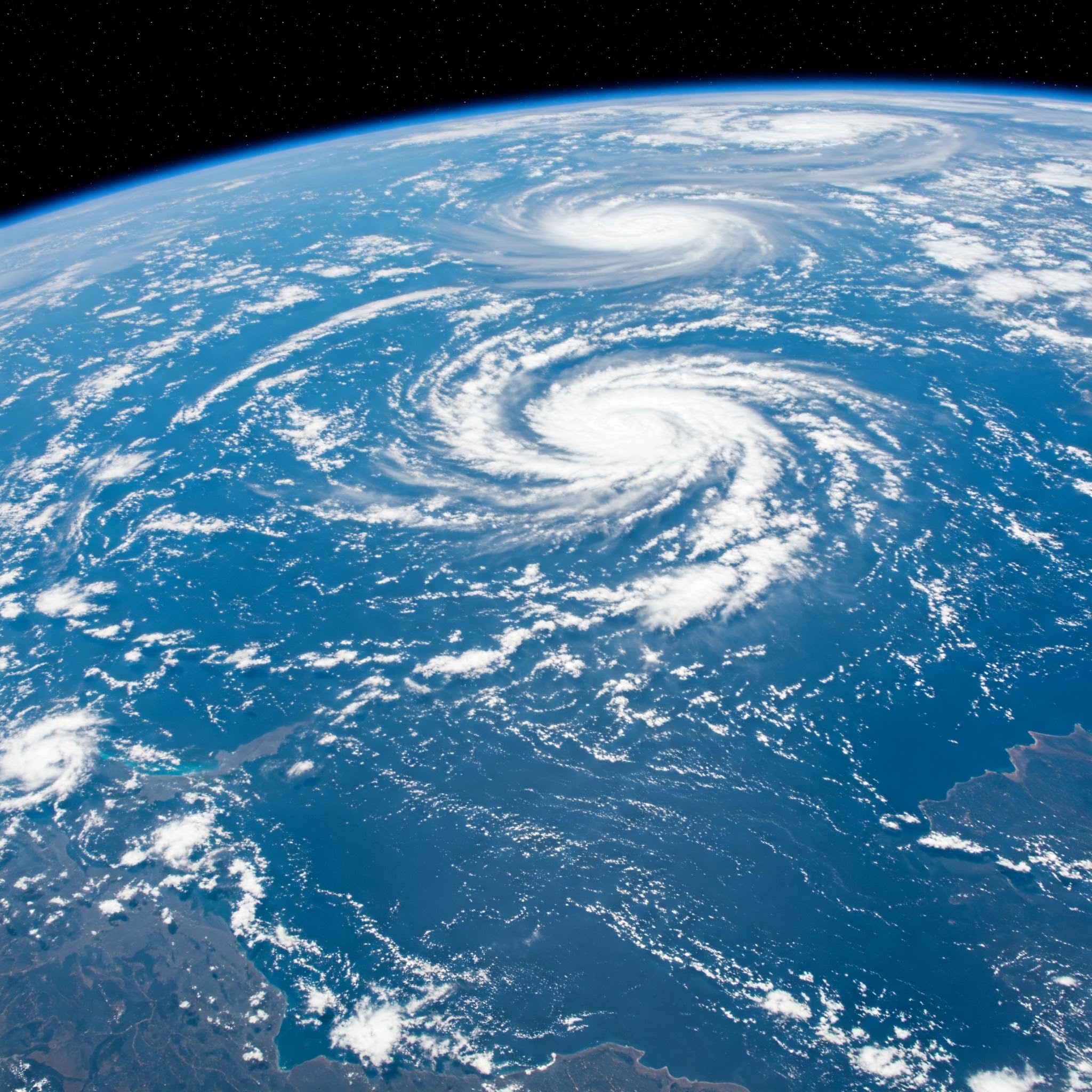
The curvature affects practical applications, such as the visibility of distant objects over the horizon. An observer at sea level can see approximately 4.8 kilometers to the horizon before the curve obscures further view, with taller objects visible farther due to the geometry. This principle is verifiable through experiments like observing ships disappearing hull-first or using precise leveling instruments over extended distances, confirming the non-flat nature of the surface without reliance on space-based imagery alone.
Earth curvature is used in long-distance infrastructure design and measurement systems. In surveying and geodesy, corrections for curvature are required for leveling and distance measurement to avoid systematic error. In civil engineering, curvature affects the design of long bridges, canals, pipelines, and railways. In telecommunications and radar engineering, Earth curvature limits line-of-sight propagation; over sufficient distances, the surface obstructs direct paths between antennas unless elevation is increased. In geodesy and mapping, curvature is fundamental to coordinate systems, map projections, and datum definitions.