
Agriculture
Applied Science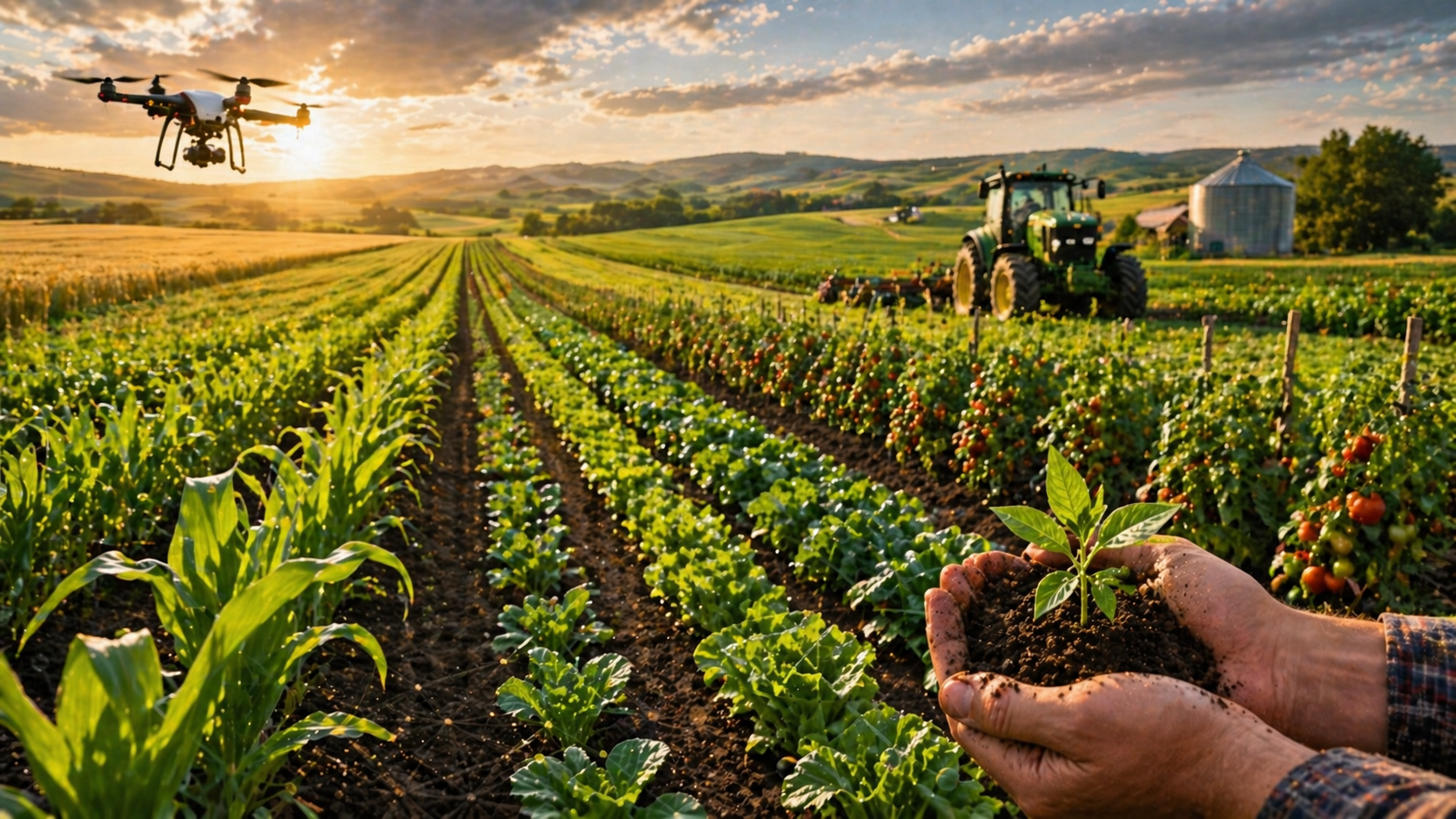 Agriculture is the day-to-day work of producing food and other essential materials by managing land, crops, and animals in a consistent and reliable way. From a farmer’s perspective, it means working directly with the soil, water, weather, and living organisms to grow crops such as grains, fruits, and vegetables, and to raise livestock like cattle, poultry, and sheep. It involves preparing the land, planting, maintaining crops through irrigation and pest control, and harvesting at the right time, as well as feeding, breeding, and caring for animals to ensure their health and productivity. These activities are based on well-established practices developed over generations and supported by modern agricultural science.
Farming also requires careful observation and timing, because agricultural success depends heavily on environmental conditions such as climate, soil quality, and seasonal cycles. Farmers make decisions about crop selection, planting schedules, and resource use based on these factors, using proven methods to maintain soil fertility, conserve water, and protect yields. Agriculture, in this sense, is both a livelihood and a system of stewardship, where the goal is to produce consistent outputs while maintaining the long-term productivity of the land. It is a crucial human activity that supports food supply and rural economies, grounded in practical knowledge and established agricultural principles.
| Science |
| Applied Science |
| Agriculture |
Agriculture Branches