Asteroid is a minor planet, which is a rocky, airless object orbiting the Sun that can be the size of a small rocks 1 meter (3.3 ft) across to as nearly as large as 1,000 kilometers (620 mi) in diameter, but its neither a planet nor a comet. Most asteroids are found in the main asteroid belt between the orbits of Mars and Jupiter and others exist in other regions of the inner solar system. However, asteroids also exist in other locations, including groups that share a planet's orbit, objects that cross planetary orbits, and populations located beyond the main asteroid belt. They formed from the same cloud of gas and dust that produced the Sun and planets, but most never became part of a planet.
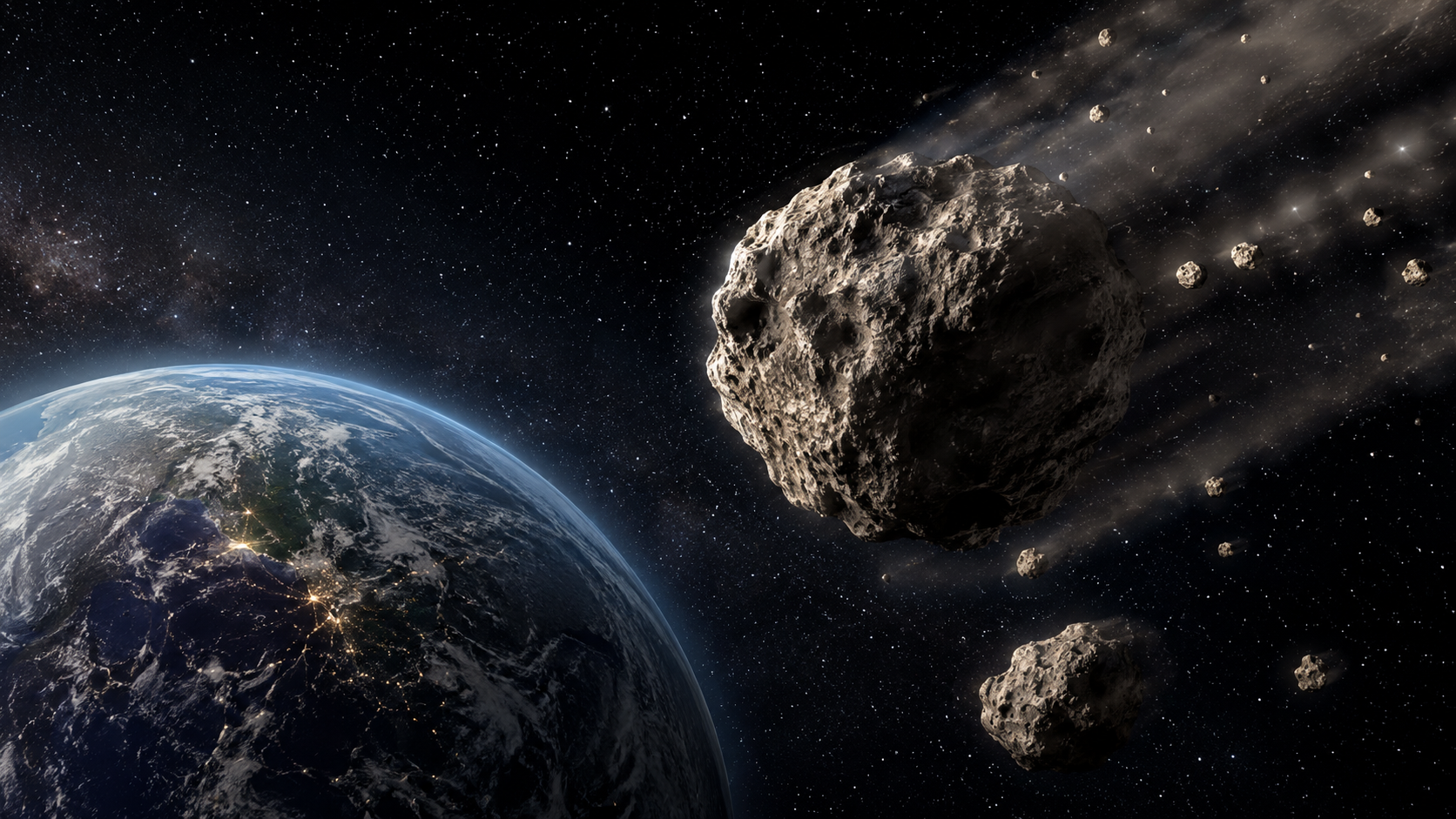 Asteroids generally have irregular shapes because their gravity is usually too weak to pull them into a sphere. They do not produce their own light, instead, they are visible because they reflect sunlight. Their compositions vary, with some consisting primarily of rock, others containing large amounts of metal such as iron and nickel, and some containing significant quantities of carbon-rich material and other minerals.