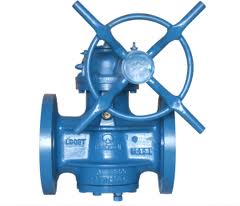
Plug valve is a quarter turn valve that has a conical or cylindrical plug that is rotated within the valve body to stop flow when needed. Plug valves function similar to a ball valve where the plug has an opening in the plug that allows fluid to flow through the valve when it is open.
Plug Valve Datasheets | |||
|---|---|---|---|
| Plug Type | Datasheets | Plug Type | Datasheets |
 |
|
|
|
|
|
|
|
Plug valves can be used as a double block and bleed valve by installing a bleeder on the body of the valve. When the valve is closed, the bleeder dcan be opened to ensure there is zero flow through the valve.
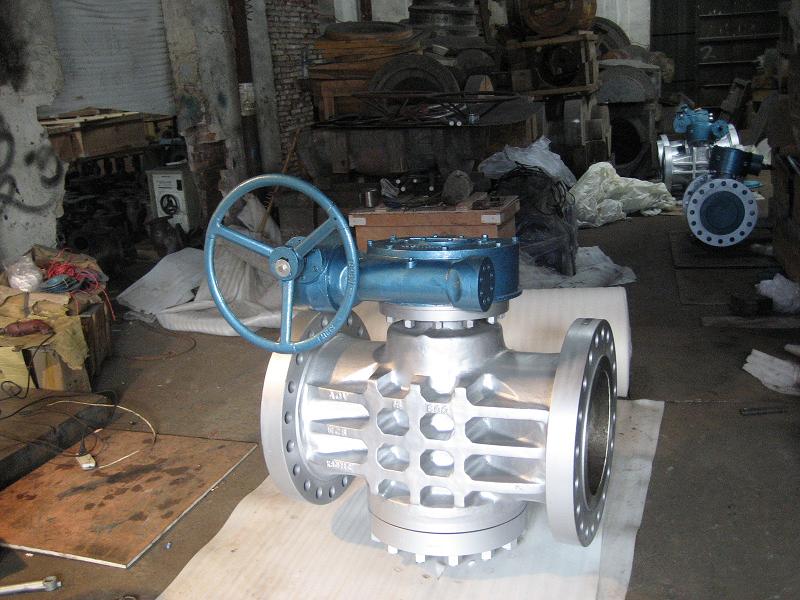
Duplex Plug Valve with Handwheel
Plug Valve Design Classification
Eccentric Plug Valve - These valves are used for numerous flow control and isolation applications that basically includes clean and dirty water, sewage, sludge and slurries, and etc. The plug has no contact with its seat until it turns within a few degrees of the shutoff position. As the plug contacts into the seat, the seating surfaces dynamically align to achieve shutoff.
Expanding Plug Valve - These valves uses multiple components tand a complex rotation motion that helps in avoiding wear or abrasions to the seals. They are a good fit for preventing product contamination in applications that do not require double isolation. In an expanding plug valve, the slips are retracted from the wall prior to completing the quarter turn, so you have no friction. Less friction means less wear, and maintenance over time.
Fire-safe Plug Valve - Fire safety plug valves use a narrowb and primary sealing ring made of a flexible, elastic material (such as Teflon) in the ring between the plug and the body cavity to prevent leakage. A fire safe soft seal valve also has a secondary metal to metal backup seal. This ensures a positive closing capability if the soft seal is damaged by fire. The maximum temperature limit of the valve is limited by the soft-seal material.
Lift Plug Valve - This valve provides a mechanical lifting arrangement to disengage the tapered plug from the seating surface to permit easy rotation. The lifting can be achieved by an external lever.
Lubricated Plug Valve - The plug is designed with grooves, which retain a lubricant (base oil and viscosity improver) to seal and lubricate the valve and prevent stricking and provide a hydraulic jacking force to lift the plug within the body. This reduces the force required for rotary operation and assists in sealing the surface of the valve stem. The lubricant is injected into the valve under pressure to reduce friction and to provide a seal between the valve’s seating surfaces. Lubricated plug valves are high maintenance as they need to be lubricated regularly.
Non-lubricated Plug Valve - Non-lubricated plug valves are usually used for lower pressure lines, and their valve seats tend to deteriorate quicker from the wear and tear of dust, dirt and other debris, compared to those on the lubricated plug valves. Non-lubricated plug valves are often chosen for use over lubricated plug valves because they require minimal maintenance.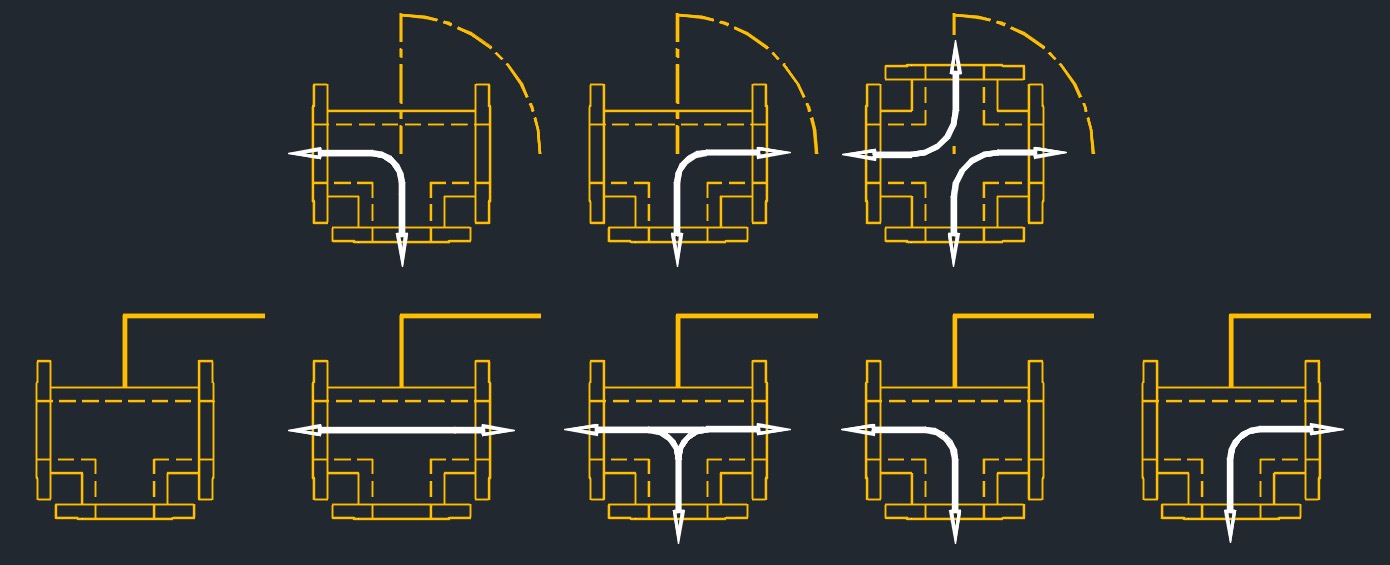 Multi-port Plug Valve - One 3-way or 4-way multiport valve may be used in place of two, three or four straightway valves, and in most cases will also eliminate other fittings such as tees and elbows. Multi-port valves have ports arranged so that when the plug is turned from one position to another, the channels previously in connection will be entirely closed before new channels begin to open. This will preventing mixture of fluids or loss of pressure.
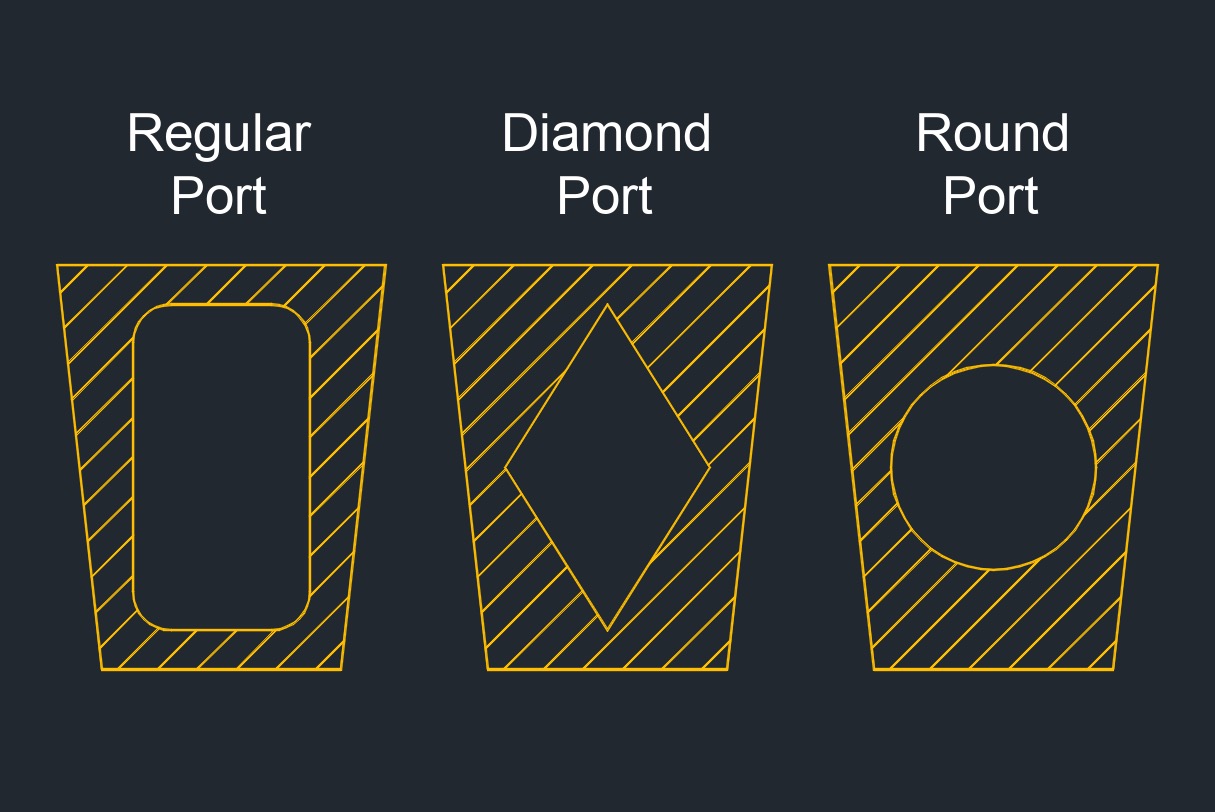 Plug Valve Port Styles
Plug Valve Pattern Styles